Why does authorship matter to AI?
Models and the systems feeding them lean toward sources that look credible, and a named, qualified author with a track record is a strong credibility signal. Anonymous, unattributed content is easier to discount, especially on topics where being wrong has consequences. Who stands behind a claim is part of how trustworthy that claim looks.
Pages with a named, credible author are more likely to be cited than anonymous ones. Even a short bio with a linked profile makes a measurable difference.
What signals authority?
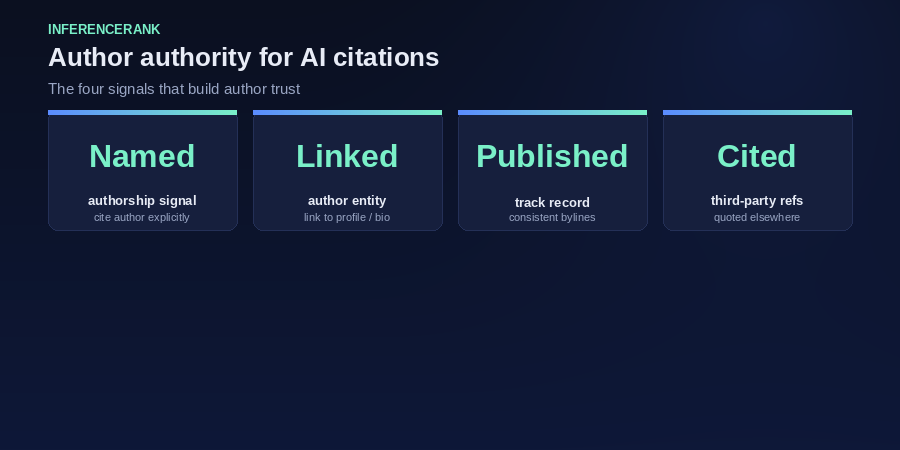
A real author with a real bio: their name, relevant experience, and credentials, linked to a fuller profile and to their presence elsewhere. Consistency matters — the same identity, accurately described, across your site and the wider web builds a recognizable expert entity. First-hand experience stated plainly ("we ran this on 200 sites") is among the most persuasive signals you can give.
How do I show it on the page?
Put a clear byline on substantive content, include a concise author bio that states why this person is qualified, and mark the author up with structured data so machines can connect the page to the person. Link the bio to a fuller author page and to their profiles elsewhere. The aim is to make the expertise behind the page unmissable to a reader and legible to a machine.
Can I fake my way to authority?
No — and trying backfires. Invented experts, borrowed credentials, or bios padded with claims you can't support are the kind of thing that erodes trust when discovered, and trust is the whole point. Authority has to be earned by genuine expertise and a real track record; the signaling only works because it points at something true.
The short version
Be a real expert and make it obvious: named authors, honest credentials, first-hand experience, structured-data attribution, and a consistent identity across the web. Authority is earned, then signaled — never faked.