What's the same for both?
Everything foundational: crawlable, answer-first pages; clear structure; sourced, accurate claims; correct structured data; and questions drawn from real buyers. Neither escapes the basics — the difference is which questions you target and which signals you emphasize on top of that shared base.
What's distinctive about B2B GEO?
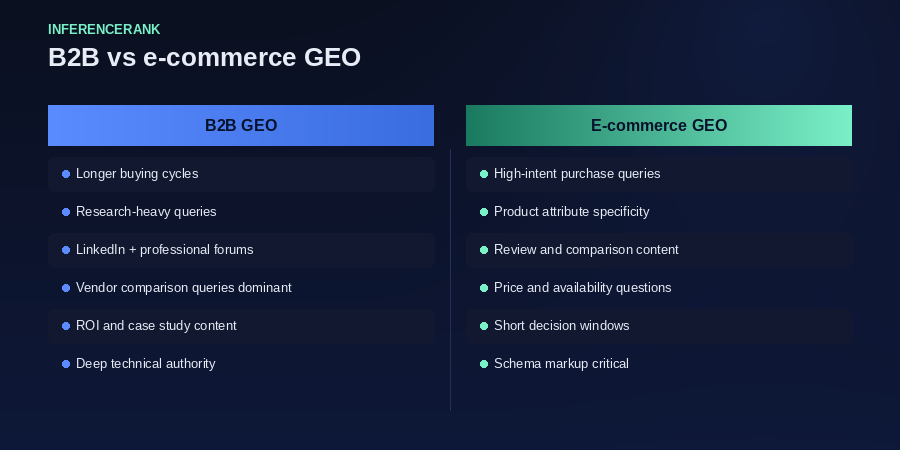
B2B buyers ask longer, more deliberate questions — about fit, integration, risk, and comparison — and they weigh authority heavily before a high-stakes, slow purchase. So B2B GEO rewards depth, demonstrated expertise, and credible comparison content, and the payoff is measured in qualified leads rather than instant conversions. Being the trusted explainer of a complex decision is the goal.
Whether you sell enterprise software or running shoes, vague claims don't earn citations. The more specific your content — real numbers, real comparisons, real trade-offs — the more likely a model is to quote it.
What's distinctive about ecommerce GEO?
Shoppers ask for products and comparisons — "best running shoe for flat feet," "alternatives to X" — and decide fast. Ecommerce GEO leans on rich, accurate product data (attributes, availability, reviews) marked up so machines can read it, plus strong category, comparison, and buying-guide pages. The job is to be the recommended option at the moment of discovery.
How should each prioritize?
B2B should invest in authoritative, in-depth content and comparison pages aimed at research questions, and accept a longer measurement window. Ecommerce should invest in product structured data and discovery-and-comparison content aimed at purchase-intent questions. Same toolkit, different first moves — match the spend to how your buyers actually decide.
The short version
Both need the GEO fundamentals; B2B then emphasizes authority and depth for considered decisions, ecommerce emphasizes product data and comparisons for fast ones. Spend where your buying journey actually is.