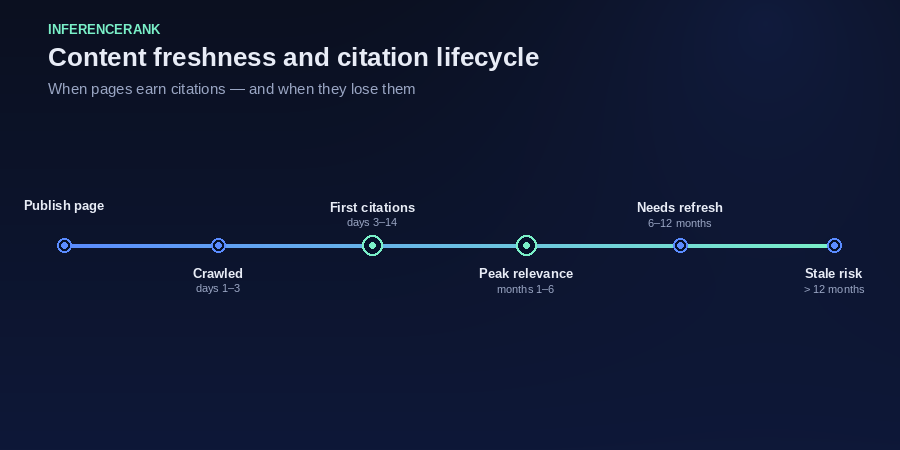
Does freshness actually affect citations?
For topics where facts change, yes — a page with outdated numbers or superseded claims is more likely to be skipped or contradicted by a model that has newer information. For genuinely evergreen topics, freshness matters less than being correct and clear. The rule isn't "update constantly," it's "don't be wrong."
How do I set a cadence?
Match it to the volatility of the subject. Pricing, tool capabilities, and anything tied to a moving market deserve a regular review — monthly or quarterly; foundational explainers can go much longer between edits. Decide the cadence per page when you publish, and put it on a schedule so it doesn't depend on memory.
A page published a year ago that still ranks and earns citations is more valuable than ten new posts that don't. Add a refresh cycle to your content calendar.
Should I change the date every time?
Only when you've made a real update. Bumping a "last updated" date without changing anything is a trust trap — readers and systems can tell, and it cheapens the signal. Honest dates that reflect genuine revisions are worth more than a perpetually "today" timestamp that means nothing.
What about old pages I can't maintain?
Prune or consolidate them. A small set of current, accurate pages beats a large archive half of which is stale, because the stale ones drag on trust and dilute the topic. Merge thin updates into stronger pages, and retire what no longer earns its keep.
The short version
Update at the speed your facts move, change the date only when you change the content, and prune what you can't keep current. Freshness is about staying correct, not performing busyness.