Why questions, not keywords?
People talk to assistants in full, natural questions, so your targets should be questions too, captured in the words buyers really use. A keyword list tells you topics; a question list tells you the exact prompts an answer engine is matching against. Building from real questions is what keeps your pages aligned with how people actually search now.
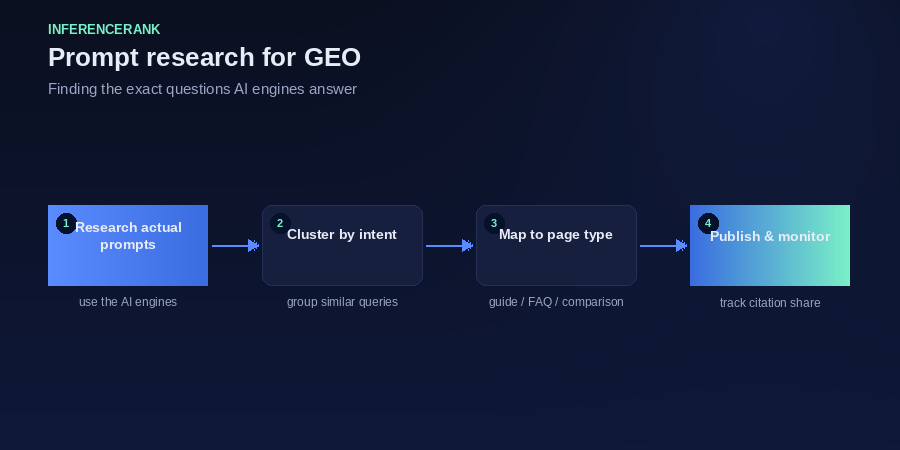
The best way to find what AI engines answer about your topic is to ask them. Run 20–30 variations of target queries and note which pages get cited. That's your content gap.
Where are the richest sources?
The ones closest to real buyers. Sales and support conversations are gold — they're literally people asking your category's questions in their own words. Mine call notes, chat logs, and ticket subjects for recurring phrasing, and you'll have a target list grounded in reality rather than imagination.
What public signals help?
Search autocomplete and "people also ask" boxes reveal how a question gets completed; community threads on forums and social show the messy, real phrasings and the follow-up questions; and competitor FAQs hint at what their buyers ask. None of these is your answer key, but together they map the question space around your topic.
Can I just ask the assistants?
Yes, and you should. Ask an assistant what people commonly want to know about your category, then ask the follow-ups it suggests — you'll surface adjacent questions you hadn't considered. Treat its output as leads to validate against your real-buyer sources, not as a finished list, since the goal is the questions your buyers ask, not generic ones.
How do I turn this into a target list?
Cluster the raw questions, dedupe near-identical phrasings, and prioritize by how close each is to a buying decision and how often it comes up. That ranked list becomes your content backlog — one focused page per question — and the fixed set you later measure share-of-answer against.
The short version
Listen to real buyers first — sales, support, communities, autocomplete — then have the assistants widen the set, and rank the result into a backlog. Own the questions people actually ask, not the ones you wish they did.