Do AI engines penalize AI-assisted content?
They reward helpful, accurate, trustworthy content and discount thin, wrong, or spammy content — regardless of how it was made. The relevant question isn't "was AI involved" but "is this good and reliable." AI assistance can produce either, so the tool is not the issue; the quality and accuracy are.
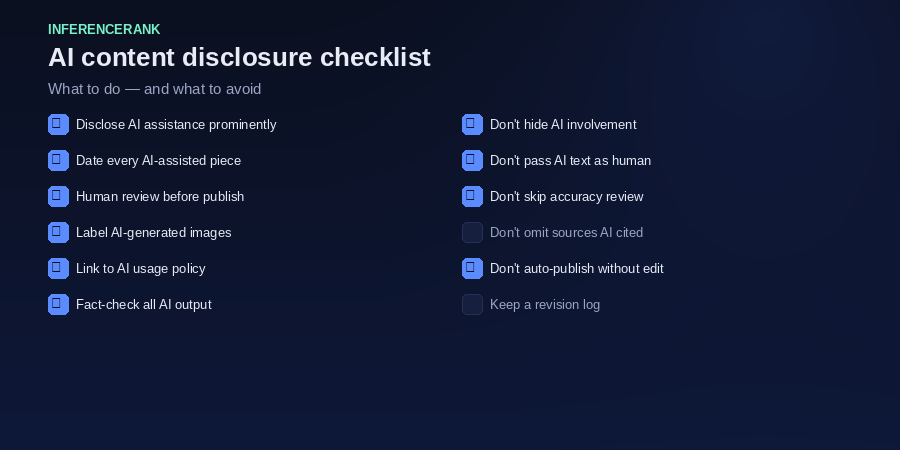
Trust is your most valuable asset with both readers and AI models. Hiding AI involvement when it's later discovered does far more damage than upfront disclosure ever would.
So why disclose at all?
Because trust is contextual. In settings where readers reasonably expect human authorship or judgment — expert advice, reviews, sensitive topics — quietly passing off unreviewed AI output as a person's work can damage credibility when noticed. The test is the same one good disclosure always uses: if knowing would change how someone trusts the page, tell them.
What does responsible use look like?
A human owns the result. Use AI to research and draft, but verify every fact, add genuine expertise and first-hand experience, and stand behind the final page as the publisher. The byline represents accountability for accuracy, not a claim about which keystrokes were typed by whom. Accountability, not theater, is the standard.
Where do the lines get firmer?
Some platforms and clients have explicit policies, and some content types — medical, legal, financial, anything high-stakes — demand clear human expertise and review. Know the rules of the venues you publish in, and when in doubt, err toward disclosure and toward more human oversight. The cost of over-disclosing is small; the cost of being caught hiding it is not.
The short version
Judge content by quality and accuracy, not by whether AI helped. Be transparent where it affects trust, follow the policies of where you publish, and keep a human accountable for every claim. Honesty and accuracy are the real standard.